
Empowering Minds: The Transformative Power of Critical Pedagogy in Education
The Power of Critical Pedagogy in Education
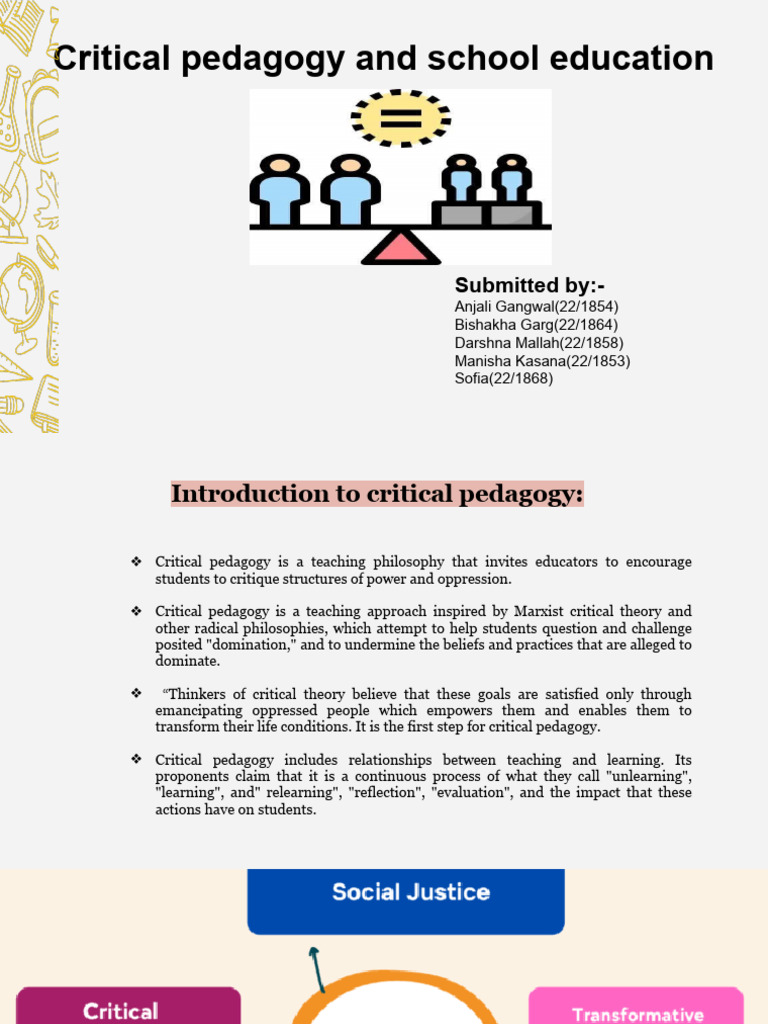
Critical pedagogy is a transformative approach to teaching and learning that aims to empower students to become critical thinkers, active citizens, and agents of social change. Rooted in the work of Brazilian educator Paulo Freire, critical pedagogy challenges traditional education paradigms by encouraging students to question and critique the social, political, and economic structures that shape their lives.
At the heart of critical pedagogy is the belief that education should not be a passive process of transferring knowledge from teacher to student, but rather an interactive and participatory experience that fosters dialogue, reflection, and action. By engaging students in critical discussions about power dynamics, inequality, and injustice, educators can help them develop a deeper understanding of the world around them and inspire them to work towards a more just and equitable society.
One of the key principles of critical pedagogy is praxis, which refers to the integration of theory and practice. In other words, students are encouraged not only to critically analyse social issues but also to take action to address them. This hands-on approach helps students connect classroom learning to real-world problems and empowers them to make a positive impact in their communities.
Furthermore, critical pedagogy emphasises the importance of creating inclusive and democratic learning environments where diverse perspectives are valued and respected. By fostering a culture of collaboration, empathy, and mutual respect, educators can create spaces where all students feel safe to express themselves authentically and engage in meaningful dialogue with their peers.
In conclusion, critical pedagogy offers a powerful framework for transforming education into a tool for social justice and empowerment. By embracing the principles of critical thinking, dialogue, praxis, inclusivity, and democracy, educators can help cultivate a new generation of engaged citizens who are equipped to challenge oppression, advocate for change, and create a more equitable world for all.
Understanding Critical Pedagogy: Key Questions and Insights for Educators
- What is critical pedagogy?
- Who developed the concept of critical pedagogy?
- How does critical pedagogy differ from traditional teaching methods?
- What are the key principles of critical pedagogy?
- How can educators implement critical pedagogy in their teaching practices?
What is critical pedagogy?
Critical pedagogy is a transformative educational approach that challenges traditional teaching methods by encouraging students to critically examine and question the social, political, and economic structures that shape their world. Rooted in the belief that education should empower individuals to become active agents of change, critical pedagogy emphasises dialogue, reflection, and action as essential components of the learning process. By fostering a culture of critical thinking and social consciousness, critical pedagogy aims to equip students with the knowledge and skills needed to engage with issues of power, inequality, and injustice in society.
Who developed the concept of critical pedagogy?
The concept of critical pedagogy was developed by the renowned Brazilian educator Paulo Freire. Through his groundbreaking work, Freire introduced a transformative approach to teaching and learning that empowers students to critically engage with social, political, and economic issues, challenging traditional education paradigms and advocating for a more just and equitable society. Freire’s emphasis on dialogue, reflection, and praxis has had a profound impact on educational practices worldwide, inspiring educators to foster critical thinking skills and empower students to become active agents of social change.
How does critical pedagogy differ from traditional teaching methods?
Critical pedagogy differs from traditional teaching methods in its emphasis on fostering critical thinking, social consciousness, and active participation among students. While traditional teaching often focuses on rote memorisation and passive learning, critical pedagogy encourages students to question, analyse, and challenge the status quo. Instead of simply transmitting information, educators using critical pedagogy engage students in discussions about power dynamics, social justice issues, and systemic inequalities. By promoting dialogue, reflection, and praxis (the integration of theory and practice), critical pedagogy empowers students to become agents of change who are equipped to address complex societal problems and work towards a more equitable and inclusive world.
What are the key principles of critical pedagogy?
In exploring the key principles of critical pedagogy, it becomes evident that this transformative educational approach is grounded in several fundamental beliefs and practices. Central to critical pedagogy is the emphasis on fostering critical thinking skills among students, encouraging them to question societal norms, power structures, and inequalities. Another key principle is the promotion of dialogue and open communication in the classroom, creating a space for diverse perspectives to be heard and valued. Additionally, critical pedagogy advocates for praxis, the integration of theory and practice, empowering students to apply their learning to real-world contexts and actively engage in social change efforts. Overall, the key principles of critical pedagogy underscore its commitment to empowering students as active participants in their own education and agents of positive societal transformation.
How can educators implement critical pedagogy in their teaching practices?
Educators can implement critical pedagogy in their teaching practices by first fostering a classroom environment that encourages open dialogue, critical thinking, and active engagement with social issues. By incorporating diverse perspectives, challenging traditional power dynamics, and encouraging students to question assumptions and explore multiple viewpoints, educators can create opportunities for meaningful learning experiences. Furthermore, integrating real-world problems and promoting experiential learning can help students connect theory to practice and empower them to take action towards positive social change. Embracing collaboration, inclusivity, and reflection in teaching strategies can enable educators to effectively implement critical pedagogy principles and inspire students to become informed, empowered agents of change in society.