
Navigating Success: The Innovation Decision Process Unveiled
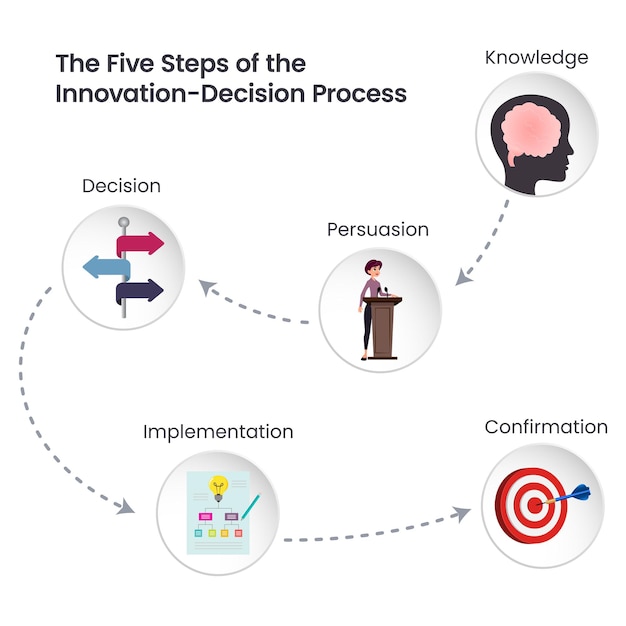
The Innovation Decision Process: Navigating the Path to Success
Innovation is a key driver of growth and success in today’s fast-paced business world. However, bringing a new idea to market involves a series of decisions and steps that can be complex and challenging. The innovation decision process is a structured approach that organisations use to navigate this journey effectively.
Understanding the Innovation Decision Process
The innovation decision process typically consists of several stages:
- Idea Generation: This is where innovative ideas are brainstormed, researched, and developed.
- Idea Evaluation: Once ideas are generated, they are evaluated based on criteria such as feasibility, market potential, and alignment with strategic goals.
- Development: Selected ideas are further developed into tangible products or services through prototyping, testing, and refinement.
- Testing and Validation: The developed innovations are tested in real-world conditions to validate their effectiveness and gather feedback for further improvement.
- Implementation: Successful innovations are launched into the market or integrated into the organisation’s operations.
- Evaluation and Learning: Post-implementation, innovations are monitored and evaluated to measure their impact and identify lessons learned for future projects.
Navigating Challenges in the Innovation Decision Process
While the innovation decision process offers a structured framework, organisations often face challenges along the way. These may include resistance to change, resource constraints, lack of alignment with organisational goals, or market uncertainties. Effective leadership, clear communication, cross-functional collaboration, and a culture that encourages experimentation and learning can help overcome these challenges.
The Role of Technology in Driving Innovation Decisions
In today’s digital age, technology plays a crucial role in enabling and accelerating the innovation decision process. Tools such as data analytics, artificial intelligence, collaboration platforms, and project management software empower organisations to streamline idea generation, enhance decision-making processes, track progress effectively, and drive continuous improvement.
Conclusion
The innovation decision process is essential for organisations looking to stay competitive and relevant in a rapidly evolving business landscape. By understanding this process, navigating its stages effectively, addressing challenges proactively, leveraging technology wisely, and fostering a culture of innovation within their teams, organisations can increase their chances of success in bringing innovative ideas to fruition.
Strategies for Enhancing the Innovation Decision Process: 7 Key Tips
- Define clear objectives and goals for the innovation process.
- Encourage a culture of creativity and open-mindedness within the organization.
- Gather input and ideas from diverse sources to spark innovation.
- Evaluate potential risks and rewards associated with each innovation opportunity.
- Allocate resources effectively to support the implementation of innovative ideas.
- Create a structured process for testing and refining innovative solutions.
- Celebrate successes and learn from failures to continuously improve the innovation decision process.
Define clear objectives and goals for the innovation process.
To enhance the effectiveness of the innovation decision process, it is crucial to define clear objectives and goals from the outset. By establishing specific and measurable targets for the innovation process, organisations can align their efforts, resources, and strategies towards a common purpose. Clear objectives provide a roadmap for decision-making, help prioritise ideas and initiatives, and enable teams to track progress and evaluate success effectively. Moreover, well-defined goals create a shared vision that motivates stakeholders, fosters collaboration, and ensures that innovation efforts are focused on delivering tangible outcomes that drive business growth and competitive advantage.
Encourage a culture of creativity and open-mindedness within the organization.
Encouraging a culture of creativity and open-mindedness within the organisation is crucial for fostering innovation in the decision-making process. By creating an environment where employees feel empowered to share new ideas, think outside the box, and challenge conventional thinking, organisations can unlock a wealth of innovative solutions and approaches. Embracing diverse perspectives and encouraging collaboration across teams can lead to breakthrough innovations that drive growth and success. A culture that values creativity and open-mindedness not only fuels the innovation decision process but also cultivates a dynamic and forward-thinking workplace where continuous improvement and adaptability thrive.
Gather input and ideas from diverse sources to spark innovation.
To enhance the innovation decision process, it is crucial to gather input and ideas from diverse sources. By tapping into a variety of perspectives, experiences, and expertise, organisations can spark creativity and innovation. Diverse inputs can lead to fresh insights, unique solutions, and out-of-the-box ideas that may not have been considered otherwise. Embracing diversity in thought and collaboration can fuel the innovation journey and drive towards successful outcomes that truly make a difference in today’s dynamic business landscape.
Evaluate potential risks and rewards associated with each innovation opportunity.
When navigating the innovation decision process, it is crucial to evaluate the potential risks and rewards associated with each innovation opportunity. By carefully assessing the risks involved, such as financial investments, market acceptance, technological challenges, and regulatory hurdles, organisations can make informed decisions and develop mitigation strategies to minimise negative impacts. Similarly, identifying the potential rewards, including increased market share, competitive advantage, revenue growth, and brand enhancement, allows organisations to prioritise opportunities with the highest potential for success. Balancing risk assessment with reward evaluation is key to making strategic and sustainable innovation decisions that drive long-term growth and success.
Allocate resources effectively to support the implementation of innovative ideas.
Allocating resources effectively is crucial to support the implementation of innovative ideas within an organisation. By dedicating the right people, budget, time, and tools to innovation projects, companies can ensure that new ideas are brought to life successfully. Effective resource allocation enables teams to focus on developing and testing innovative solutions without being hindered by constraints. It also demonstrates a commitment to innovation from leadership, encouraging creativity and risk-taking among employees. Ultimately, strategic resource allocation plays a key role in turning innovative concepts into tangible outcomes that drive growth and competitive advantage.
Create a structured process for testing and refining innovative solutions.
Creating a structured process for testing and refining innovative solutions is crucial in the innovation decision process. By establishing clear criteria, metrics, and methodologies for evaluating new ideas, organisations can systematically assess their feasibility, effectiveness, and potential impact. Through rigorous testing in real-world scenarios and iterative refinement based on feedback and data analysis, innovative solutions can be fine-tuned to meet user needs, address market demands, and align with strategic objectives. This structured approach not only enhances the quality of innovations but also minimises risks and uncertainties, ultimately increasing the likelihood of successful implementation and positive outcomes.
Celebrate successes and learn from failures to continuously improve the innovation decision process.
In the realm of the innovation decision process, it is crucial to celebrate successes and learn from failures as a means to continuously enhance and refine the process. By acknowledging and commemorating achievements, teams can boost morale, foster a culture of appreciation, and motivate members to strive for further success. Equally important is the ability to glean valuable insights from setbacks and failures, turning them into opportunities for growth and improvement. Embracing both successes and failures as integral parts of the innovation journey allows organisations to iteratively enhance their decision-making processes, drive innovation forward, and ultimately achieve sustainable success in their endeavours.