
Embracing Discontinuous Innovation: Pioneering Change in Today’s Business Landscape
The Power of Discontinuous Innovation in Today’s Business World
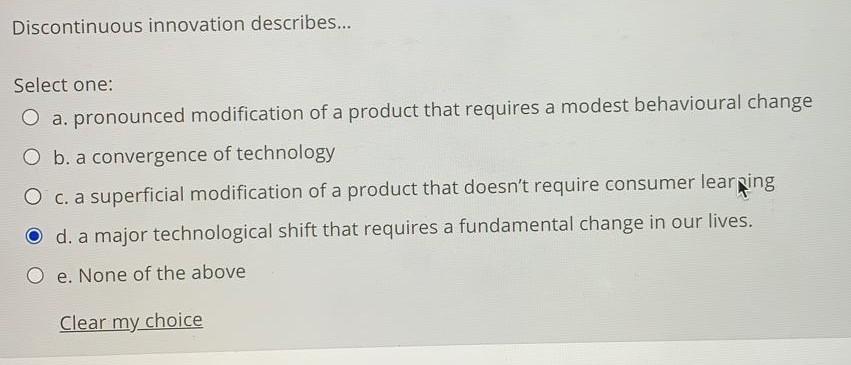
In the fast-paced and ever-evolving landscape of business, innovation is key to staying ahead of the competition. While continuous innovation involves incremental improvements to existing products or processes, discontinuous innovation represents a radical shift or breakthrough that fundamentally changes the game.
Discontinuous innovation challenges the status quo and redefines industry standards. It introduces new technologies, business models, or ways of thinking that disrupt traditional markets and create new opportunities for growth and success.
One classic example of discontinuous innovation is the introduction of the smartphone. Before smartphones, mobile phones were primarily used for calls and texts. The advent of smartphones revolutionised communication by combining phone capabilities with internet access, apps, cameras, and more.
Discontinuous innovation requires bold vision, creativity, and a willingness to take risks. Companies that embrace discontinuous innovation are more likely to differentiate themselves from competitors, attract new customers, and drive significant value for their stakeholders.
However, implementing discontinuous innovation can be challenging. It often involves substantial investment in research and development, as well as a willingness to break away from conventional thinking. Companies must also be prepared for potential resistance from within their own organisations or from established players in the industry.
Despite the challenges, the rewards of discontinuous innovation can be immense. By pushing boundaries and exploring uncharted territory, businesses can unlock new sources of growth and create sustainable competitive advantages that propel them towards long-term success.
In conclusion, discontinuous innovation is a powerful force that drives progress and transformation in today’s business world. Embracing change and daring to think differently can lead to groundbreaking innovations that shape the future of industries and redefine what is possible.
Understanding Discontinuous Innovation: Key Differences, Examples, and Types
- What is the difference between discontinuous and incremental innovation?
- What is an example of a discontinuous technology?
- What is the difference between continuous innovation and discontinuous innovation?
- What is discontinuous product?
- What are the 4 types of innovation?
What is the difference between discontinuous and incremental innovation?
In the realm of innovation, understanding the distinction between discontinuous and incremental innovation is crucial. Incremental innovation involves making small, gradual improvements to existing products, services, or processes over time. It focuses on enhancing what already exists without fundamentally changing the core aspects. On the other hand, discontinuous innovation represents a significant and radical shift that introduces entirely new concepts, technologies, or approaches that disrupt the status quo. Unlike incremental innovation, which builds upon existing foundations, discontinuous innovation breaks away from tradition and paves the way for groundbreaking advancements that can reshape industries and create new market opportunities.
What is an example of a discontinuous technology?
An example of a discontinuous technology is the transition from traditional incandescent light bulbs to Light Emitting Diodes (LEDs). This shift represents a radical departure from the conventional lighting technology by offering significant energy efficiency, longer lifespan, and versatility in lighting design. LEDs have revolutionised the lighting industry, providing a more sustainable and cost-effective alternative that has transformed how we illuminate our homes, offices, and public spaces. The adoption of LED technology has not only improved lighting quality but also contributed to energy conservation efforts on a global scale.
What is the difference between continuous innovation and discontinuous innovation?
Continuous innovation and discontinuous innovation are two distinct approaches to driving progress and change within businesses. Continuous innovation involves making incremental improvements to existing products, services, or processes over time. It focuses on refining and optimising current offerings to enhance efficiency, quality, or customer satisfaction. On the other hand, discontinuous innovation represents a radical shift or breakthrough that introduces entirely new technologies, products, or business models that fundamentally change the status quo. Unlike continuous innovation, which builds upon existing foundations, discontinuous innovation challenges conventional thinking and can lead to disruptive changes in industries. Both forms of innovation play vital roles in driving growth and competitiveness, with continuous innovation ensuring ongoing evolution and improvement while discontinuous innovation sparks transformative breakthroughs that reshape markets and create new opportunities for businesses.
What is discontinuous product?
A discontinuous product refers to a revolutionary or breakthrough innovation that fundamentally changes the way a product is perceived, used, or experienced. Unlike incremental improvements or modifications to existing products, a discontinuous product represents a significant departure from the status quo, introducing new features, functionalities, or technologies that redefine industry standards. Discontinuous products often disrupt traditional markets, create new customer needs and expectations, and have the potential to reshape entire industries by offering unique value propositions that set them apart from existing alternatives.
What are the 4 types of innovation?
In the realm of innovation, there are generally four types that are commonly recognised: incremental innovation, breakthrough innovation, disruptive innovation, and open innovation. Incremental innovation involves making small improvements to existing products or processes, while breakthrough innovation represents significant advancements or discoveries that lead to new possibilities. Disruptive innovation challenges established norms and creates new markets by offering simpler, more affordable alternatives. Open innovation involves collaboration with external partners to share ideas and resources for mutual benefit. Each type of innovation plays a unique role in driving progress and shaping the future of industries.