
Qualitative Health Research: Understanding Experiences of Health and Care
Qualitative Health Research: Understanding Experiences of Health and Care
Health is shaped by more than diagnoses, treatments and clinical outcomes. People’s experiences of illness, care and recovery are influenced by their relationships, communities, beliefs and circumstances. Qualitative health research helps explore these experiences, offering insight into how people understand health and how healthcare is delivered and received.
What is qualitative health research?
Qualitative health research investigates meanings, experiences and social processes related to health. Rather than focusing primarily on numerical measurement, it asks questions such as:
- How do people experience a particular illness or treatment?
- What influences decisions about seeking or accepting care?
- How do patients and professionals communicate?
- How do culture, identity or living conditions shape health experiences?
It can be used on its own or alongside quantitative research. For example, a clinical study might measure whether a treatment improves symptoms, while qualitative interviews explore how participants feel about the treatment and what makes it easier or harder to use.
Common methods
Researchers choose methods that fit their question and the people or settings they want to understand. Common approaches include:
- Interviews: One-to-one conversations that explore a participant’s experiences, views or decisions in depth.
- Focus groups: Guided discussions that help researchers understand shared views and differences within a group.
- Observation: Watching interactions or activities in a healthcare or community setting, sometimes while taking part in them.
- Document analysis: Examining materials such as care records, policies, letters or online discussions to understand how health and care are described.
Data may take the form of recordings, transcripts, field notes, images or written documents. Researchers then interpret the material using a systematic approach, such as thematic analysis, narrative analysis or grounded theory.
Why it matters
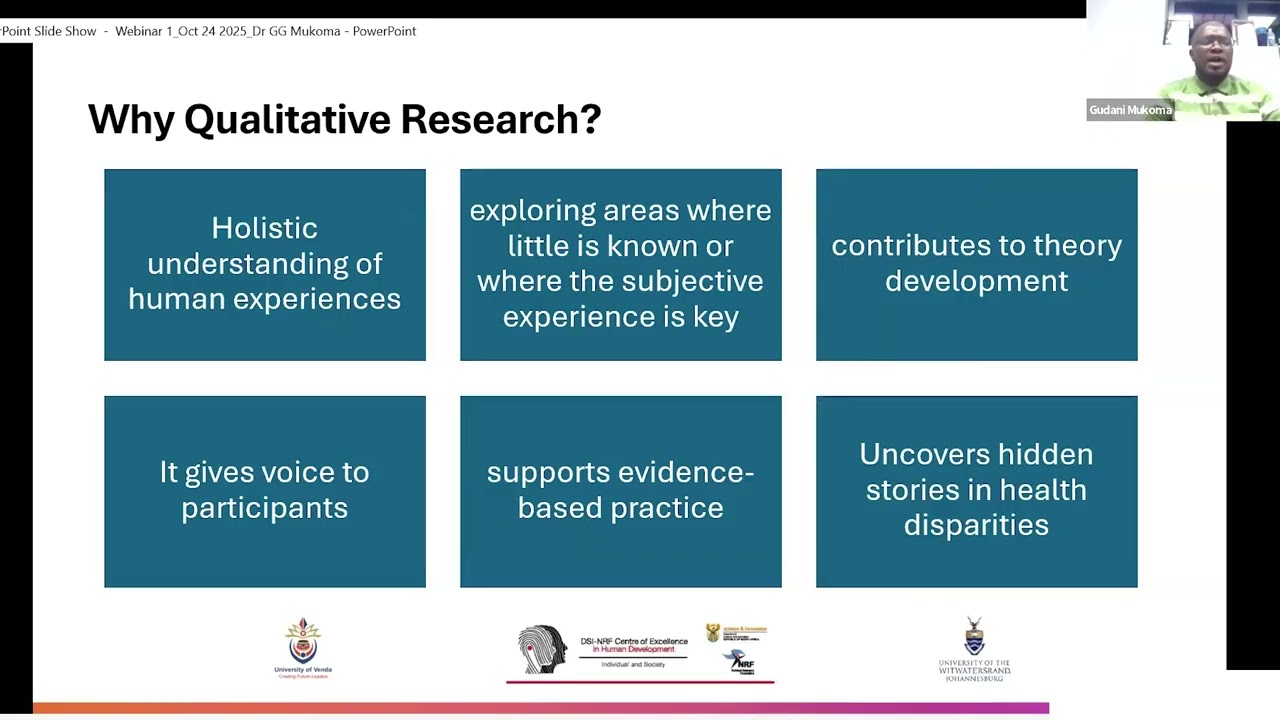
Qualitative research can help reveal aspects of health and care that are difficult to capture in statistics alone. It can show why a service works well for some people but not others, identify concerns that might otherwise be overlooked, and explain how people make sense of complex choices.
These insights can inform the design of services, patient information and health interventions. They can also help researchers and decision-makers consider whether a service is accessible, respectful and responsive to the needs of different communities.
Quality and rigour
Qualitative research is not simply a collection of personal opinions. Strong studies use clear research questions, appropriate methods and careful analysis. Researchers explain how participants were selected, how information was gathered and how conclusions were reached.
Reflexivity is also important. Researchers consider how their own background, assumptions and relationship with participants may influence the research. Keeping a record of decisions, comparing interpretations and including relevant quotations can make the analysis more transparent. The aim is not always to produce findings that apply identically everywhere; it is to provide a credible, well-supported account that readers can assess in context.
Ethical considerations
Health research may involve sensitive experiences, personal information or people in vulnerable situations. Ethical practice includes obtaining informed consent, protecting confidentiality and explaining how information will be used. Researchers should also consider potential distress, power imbalances and the burden of taking part.
Participants’ time and knowledge should be treated with respect. Where appropriate, involving patients and members of the public in shaping the research can help ensure that the questions, methods and outputs are relevant to the people most affected.
Strengths and limitations
A key strength of qualitative research is its depth. It can provide detailed accounts of individual and shared experiences, uncover unexpected issues and help explain the context behind patterns in health data.
Its findings are usually based on smaller, carefully selected groups, so they are not intended to estimate how common an experience is across an entire population. Interpretation also requires care: researchers need to distinguish what participants said from the conclusions they draw. Qualitative findings are most useful when their context and limitations are clearly described and considered alongside other evidence where relevant.
Conclusion
Qualitative health research helps make people’s experiences visible in discussions about health and healthcare. By exploring how care is understood, accessed and experienced, it can complement numerical evidence and support more thoughtful, person-centred services. Its value depends on asking meaningful questions, working ethically with participants and presenting findings with clarity and rigour.
Five Tips for Rigorous and Ethical Qualitative Health Research
- Choose a focused, answerable research question.
- Select methods that suit participants and context.
- Recruit for a range of relevant perspectives.
- Use reflexive, transparent analysis.
- Protect confidentiality and seek informed consent.
Choose a focused, answerable research question.
A focused, answerable research question gives qualitative health research a clear direction. Rather than trying to explore a broad topic such as “experiences of healthcare”, narrow the question to a particular group, setting or aspect of care—for example, “How do adults with type 2 diabetes describe the support they receive from their GP practice?” A well-defined question helps you choose suitable participants and methods, keeps data collection manageable and makes it easier to produce findings that are meaningful and useful.
Select methods that suit participants and context.
Choose research methods that suit both the people taking part and the setting in which the study takes place. Consider participants’ communication preferences, accessibility needs, language, time and comfort, as well as practical factors such as privacy and available resources. For example, an individual interview may be more appropriate than a focus group when discussing sensitive experiences, while a familiar community setting may help participants feel at ease. A thoughtful choice of method can support meaningful participation and produce richer, more relevant findings.
Recruit for a range of relevant perspectives.
Recruit participants who can offer a range of perspectives relevant to your research question. This may include people with different experiences of illness or care, as well as variation in age, background, location or access to services. A thoughtfully diverse sample can reveal contrasting views, highlight barriers that might otherwise be missed and deepen understanding of the topic. Be clear about why particular perspectives matter, and avoid treating any group as though its members all share the same experience.
Use reflexive, transparent analysis.
Use reflexive, transparent analysis by explaining how your background, assumptions and relationship with participants may shape the research. Keep a clear record of how data were coded, how themes or interpretations developed, and why key decisions were made. This helps readers understand how you reached your conclusions and assess the credibility of your findings.
Protect confidentiality and seek informed consent.
Protecting confidentiality and obtaining informed consent are essential to ethical qualitative health research. Participants should understand the purpose of the study, what taking part involves, how their information will be used and stored, and that they can withdraw without penalty. Researchers should explain any limits to confidentiality, remove identifying details from recordings and reports, and store data securely. Taking these steps helps participants make an informed choice and supports trust throughout the research.