
Unveiling the Educational Legacy of Benjamin Bloom
Exploring the Legacy of Benjamin Bloom
Benjamin Samuel Bloom (1913–1999) was an influential American educational psychologist known for his groundbreaking contributions to the field of education. His work has had a lasting impact on teaching practices and educational assessment, shaping the way educators approach student learning and development.
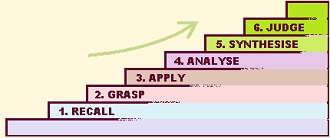
Bloom is perhaps best known for his taxonomy of educational objectives, commonly referred to as Bloom’s Taxonomy. This hierarchical model categorises educational goals into cognitive domains, ranging from simple recall of information to more complex levels of understanding, application, analysis, synthesis, and evaluation. Bloom’s Taxonomy provides a framework for educators to design learning experiences that cater to different levels of cognitive ability.
Another significant contribution by Bloom is his research on mastery learning. He believed that all students are capable of achieving mastery in a subject if provided with appropriate instruction and support. Mastery learning emphasises the importance of individualised instruction, feedback, and remediation to ensure that every student reaches a high level of proficiency.
Bloom’s work has also influenced assessment practices in education. He advocated for the use of formative assessment techniques to monitor student progress and provide timely feedback for improvement. By focusing on continuous assessment and feedback, educators can better support student learning and address individual needs effectively.
Throughout his career, Benjamin Bloom dedicated himself to improving teaching and learning practices through rigorous research and innovative ideas. His legacy continues to inspire educators worldwide to strive for excellence in education and create meaningful learning experiences for all students.
Enhancing Education: 7 Tips on Implementing Benjamin Bloom’s Taxonomy
- Benjamin Bloom was an American educational psychologist.
- He is best known for his taxonomy of educational objectives, commonly known as Bloom’s Taxonomy.
- Bloom’s Taxonomy categorises learning objectives into six levels
- It is widely used in education to structure lesson plans and assessments.
- Bloom believed that higher-order thinking skills are important for students to develop critical thinking and problem-solving abilities.
- His work has had a significant impact on curriculum development and instructional design.
- Educators can use Bloom’s Taxonomy to create more effective learning experiences for students.
Benjamin Bloom was an American educational psychologist.
Benjamin Bloom, an American educational psychologist, made significant contributions to the field of education through his pioneering research and innovative ideas. His work, including the development of Bloom’s Taxonomy and advocacy for mastery learning, has had a lasting impact on teaching practices and educational assessment globally. Bloom’s legacy as an influential figure in education continues to inspire educators to enhance student learning and development through evidence-based strategies and approaches.
He is best known for his taxonomy of educational objectives, commonly known as Bloom’s Taxonomy.
Benjamin Bloom is widely recognised for his significant contribution to education through his taxonomy of educational objectives, famously known as Bloom’s Taxonomy. This hierarchical model categorises educational goals into cognitive domains, providing a structured framework for educators to design learning experiences that cater to various levels of cognitive ability. Bloom’s Taxonomy has become a cornerstone in educational practice, guiding teachers in developing curriculum that promotes critical thinking, problem-solving skills, and higher-order thinking abilities among students.
Bloom’s Taxonomy categorises learning objectives into six levels
Benjamin Bloom’s Taxonomy is a renowned framework that categorises learning objectives into six distinct levels, providing educators with a structured approach to designing and assessing student learning. By delineating these levels of cognitive complexity, ranging from basic recall to higher-order thinking skills like evaluation and synthesis, Bloom’s Taxonomy offers a comprehensive guide for educators to tailor their teaching methods and assessments to meet the diverse needs and abilities of learners. This systematic classification system has significantly influenced educational practices, encouraging teachers to create engaging and challenging learning experiences that foster deeper understanding and critical thinking among students.
It is widely used in education to structure lesson plans and assessments.
Benjamin Bloom’s taxonomy, commonly known as Bloom’s Taxonomy, is widely utilised in education to structure lesson plans and assessments. Educators rely on this hierarchical model to design learning experiences that cater to different levels of cognitive ability, from basic recall to higher-order thinking skills. By incorporating Bloom’s Taxonomy into their teaching practices, teachers can create more effective lesson plans that target specific learning objectives and assess student understanding at various levels of complexity. This approach not only enhances the quality of education but also ensures that students are challenged and supported in their learning journey.
Bloom believed that higher-order thinking skills are important for students to develop critical thinking and problem-solving abilities.
Benjamin Bloom emphasised the significance of cultivating higher-order thinking skills in students as a means to foster critical thinking and problem-solving capabilities. He asserted that encouraging students to engage with complex cognitive processes such as analysis, synthesis, and evaluation not only enhances their academic achievement but also equips them with the essential skills needed to navigate challenges and make informed decisions in various aspects of their lives. Bloom’s emphasis on higher-order thinking underscores the importance of nurturing students’ ability to think critically and creatively, laying a foundation for lifelong learning and success.
His work has had a significant impact on curriculum development and instructional design.
Benjamin Bloom’s influential contributions have left a lasting mark on curriculum development and instructional design within the field of education. His innovative approaches, such as Bloom’s Taxonomy and mastery learning, have provided educators with valuable frameworks to enhance teaching strategies and create more effective learning experiences for students. By emphasising the importance of setting clear educational objectives and tailoring instruction to meet diverse cognitive needs, Bloom’s work has significantly influenced how curricula are structured and how teaching methods are designed to optimise student learning outcomes.
Educators can use Bloom’s Taxonomy to create more effective learning experiences for students.
Educators can harness the power of Bloom’s Taxonomy to enhance the quality of learning experiences for students. By utilising this hierarchical model of educational objectives, teachers can design activities and assessments that cater to different levels of cognitive complexity, promoting deeper understanding and critical thinking skills among learners. Bloom’s Taxonomy serves as a valuable tool for educators to structure their teaching methods in a way that encourages student engagement, mastery of content, and overall academic growth.