
PhD in Business: A Guide to Doctoral Study and Career Opportunities
PhD in Business: A Guide to Doctoral Study
A PhD in Business is an advanced research degree for people who want to investigate important questions about organisations, markets and management. It involves developing original research, contributing to academic knowledge and learning how to carry out rigorous, independent research.
Business PhD programmes are available in areas such as strategy, marketing, finance, accounting, entrepreneurship, organisational behaviour, operations and business analytics. The exact subjects and programme structure vary between universities.
What is a PhD in Business?
A Doctor of Philosophy (PhD) in Business is generally focused on research rather than professional training. Students identify a research question, review existing scholarship, select appropriate methods, collect or analyse evidence, and present their findings in a thesis. They may also attend research seminars, take specialist courses or contribute to teaching, depending on the programme.
The aim is to produce work that makes an original contribution to the field. This might involve testing an existing theory, developing a new explanation for a business phenomenon or examining how organisations respond to a particular challenge.
PhD or DBA: what is the difference?
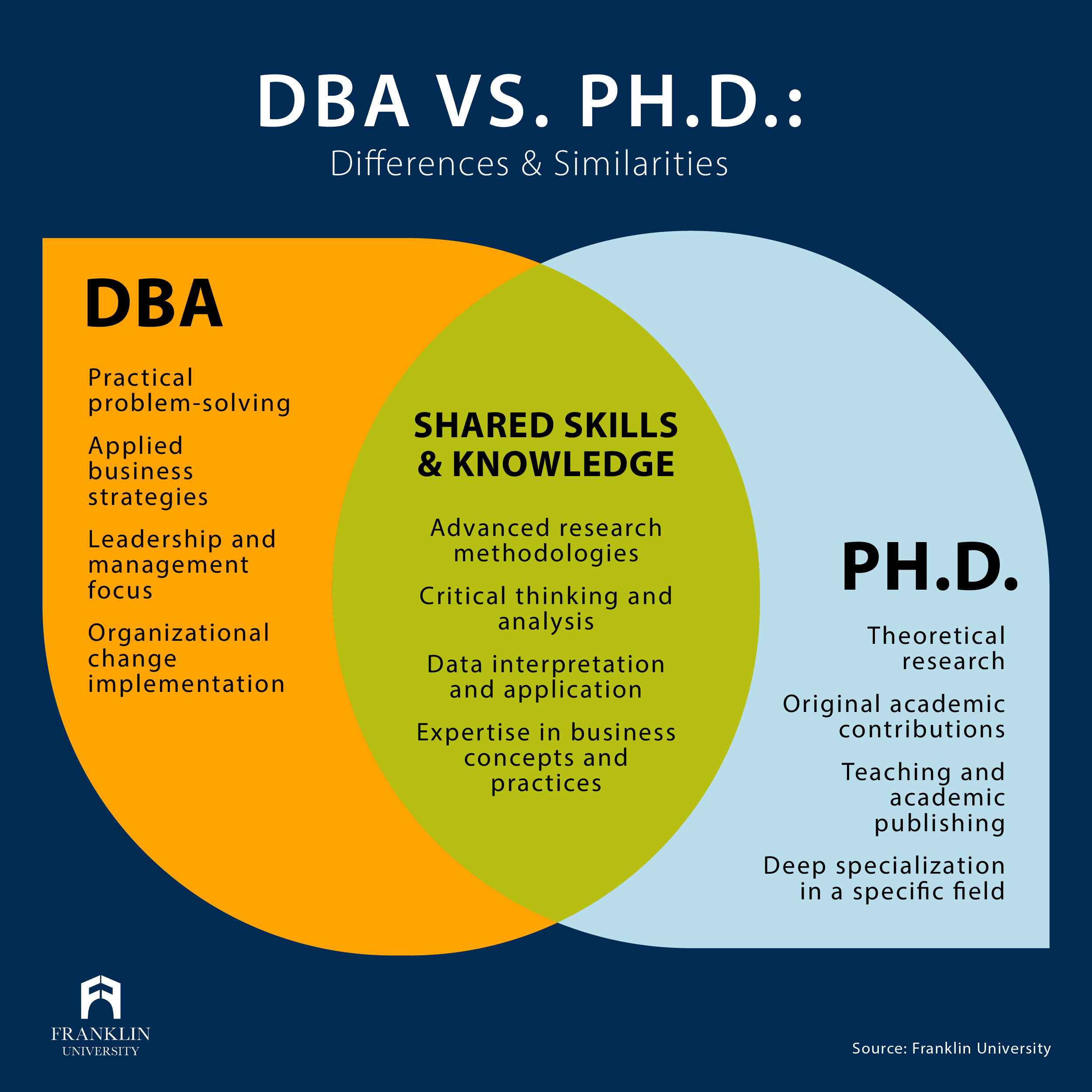
A PhD and a Doctor of Business Administration (DBA) are both doctoral-level qualifications, but they often have different purposes. A PhD is usually designed for people who want to pursue academic research or research-focused careers. A DBA typically emphasises the application of research to professional practice and may suit experienced managers seeking to investigate challenges in their organisations or industries.
These distinctions are not absolute. Programme content varies, so prospective students should compare the research expectations, intended outcomes and entry requirements of individual courses.
What can you study?
Business research covers a wide range of topics. Examples include:
- how leadership and workplace culture affect employee wellbeing;
- the impact of artificial intelligence on business decisions;
- how companies develop and sustain competitive strategies;
- consumer behaviour and the effectiveness of marketing;
- access to finance for new and growing businesses;
- the relationship between corporate governance and performance;
- sustainable business models and responsible supply chains.
A strong research topic is focused enough to investigate in depth, while also being relevant to a wider academic or practical debate.
How long does a Business PhD take?
The duration depends on the country, university, study mode and nature of the research. In the UK, a full-time PhD commonly takes around three to four years, while part-time study may take longer. The research can take additional time if access to data is difficult, the project changes direction or the thesis requires substantial revision.
Before applying, check the university’s expected submission timeline and whether the programme includes a formal research training period.
Entry requirements
Universities set their own admissions criteria, but applicants are often expected to have a strong academic background in business or a related subject. A master’s degree involving research may be an advantage, although some programmes consider applicants with other relevant qualifications and experience.
Applications commonly require:
- academic transcripts and certificates;
- a research proposal or statement of research interests;
- references from academic or professional contacts;
- evidence of English-language proficiency, where required;
- a CV and, in some cases, an interview.
A research proposal should explain the question you want to investigate, why it matters, how it relates to existing research and how you might study it. It is usually a starting point rather than a final plan: the project may be refined with a supervisor after admission.
Choosing a university and supervisor
Finding a suitable supervisor is an important part of applying for a PhD. Look for academics whose research interests connect with your proposed topic. Their expertise, availability and approach to supervision can have a significant influence on your doctoral experience.
When comparing programmes, consider:
- the research strengths of the business school;
- access to relevant data, facilities or industry partners;
- training in research methods and academic writing;
- opportunities to attend seminars and present your work;
- supervision arrangements and progress reviews;
- funding, fees and the cost of living.
Funding a PhD
Doctoral study can be funded in several ways. Some students receive university scholarships, research council funding, project-based studentships or support from an employer. Others pay fees themselves or combine different sources of funding.
Funding may cover tuition fees, living costs or both, and eligibility can depend on residency, subject area and academic record. Check deadlines carefully, as scholarship applications may close earlier than applications for admission. It is also sensible to prepare a realistic budget for the full period of study.
Careers after a Business PhD
Many graduates pursue academic careers, including teaching, research and university leadership. A PhD can also support careers beyond higher education, particularly in roles that require advanced research and analytical skills. These may include consulting, public policy, market research, economic analysis, corporate strategy and research positions in business or government.
Career outcomes vary, and a doctorate does not guarantee an academic post. During the programme, students can strengthen their options by developing skills in communication, teaching, project management, data analysis and collaboration.
Is a PhD in Business right for you?
A Business PhD may be a good fit if you are curious about a particular problem, enjoy examining evidence and are prepared to work independently over an extended period. Doctoral research can be rewarding, but it also requires persistence, flexibility and comfort with uncertainty. Research questions often evolve as new evidence emerges.
Before applying, consider your motivations, career goals, financial circumstances and preferred area of study. Speaking with current doctoral students and potential supervisors can help you understand what the experience involves.
Conclusion
A PhD in Business offers the opportunity to investigate a significant question and contribute new knowledge about organisations and the economy. Choosing the right topic, programme and supervisor is essential. With careful planning and a clear understanding of the demands of doctoral research, prospective students can decide whether this path suits their academic interests and long-term goals.
Five Essential Tips for a Successful PhD in Business
- Choose a focused, researchable question.
- Find a supervisor whose expertise fits.
- Build strong research and data skills.
- Plan funding and timelines early.
- Share your findings and seek feedback.
Choose a focused, researchable question.
Choose a focused, researchable question for your PhD in Business. A clearly defined question will give your project direction and help you decide what evidence to collect and which methods to use. Rather than tackling a broad topic such as leadership or innovation, identify a specific issue, context or group to study. Check that relevant data can be accessed and that the project is manageable within your time and resources. You can refine the question with your supervisor as your research develops.
Find a supervisor whose expertise fits.
Choose a supervisor whose research expertise closely matches your interests. Their knowledge can help you shape a focused research question, identify suitable methods and navigate challenges as your project develops. Before applying, read their recent publications and check whether they are accepting doctoral students. A good fit also depends on communication and supervision style, so, where possible, speak with them and ask current students about their experience.
Build strong research and data skills.
Build strong research and data skills early in your PhD in Business. Learn how to assess academic literature, design robust studies and choose methods suited to your research question. Develop confidence with relevant qualitative or quantitative techniques, such as interviewing, statistical analysis or working with business datasets. These skills will help you interpret evidence critically, support your conclusions and produce research that is both credible and useful.
Plan funding and timelines early.
Plan your funding and timelines early, as doctoral applications, scholarships and studentships often have different deadlines. Research tuition fees, living costs and the funding options available, and check what each award covers and whether you meet its eligibility criteria. Allow plenty of time to prepare your research proposal and application, and build a realistic schedule for the PhD itself, including research, writing and submission. Planning ahead can help you avoid unnecessary financial pressure and focus on your studies.
Share your findings and seek feedback.
Share your findings regularly and seek feedback from your supervisor, fellow researchers and relevant professionals. Presenting your work at seminars or conferences, and discussing it with people outside your immediate research group, can help you spot gaps, clarify your arguments and consider alternative interpretations. Constructive feedback may feel challenging, but responding to it thoughtfully can strengthen your research and make your final thesis more rigorous and persuasive.