
Advancing Solutions Through Applied Research: A Path to Real-World Impact
The Importance of Applied Research in Addressing Real-World Challenges
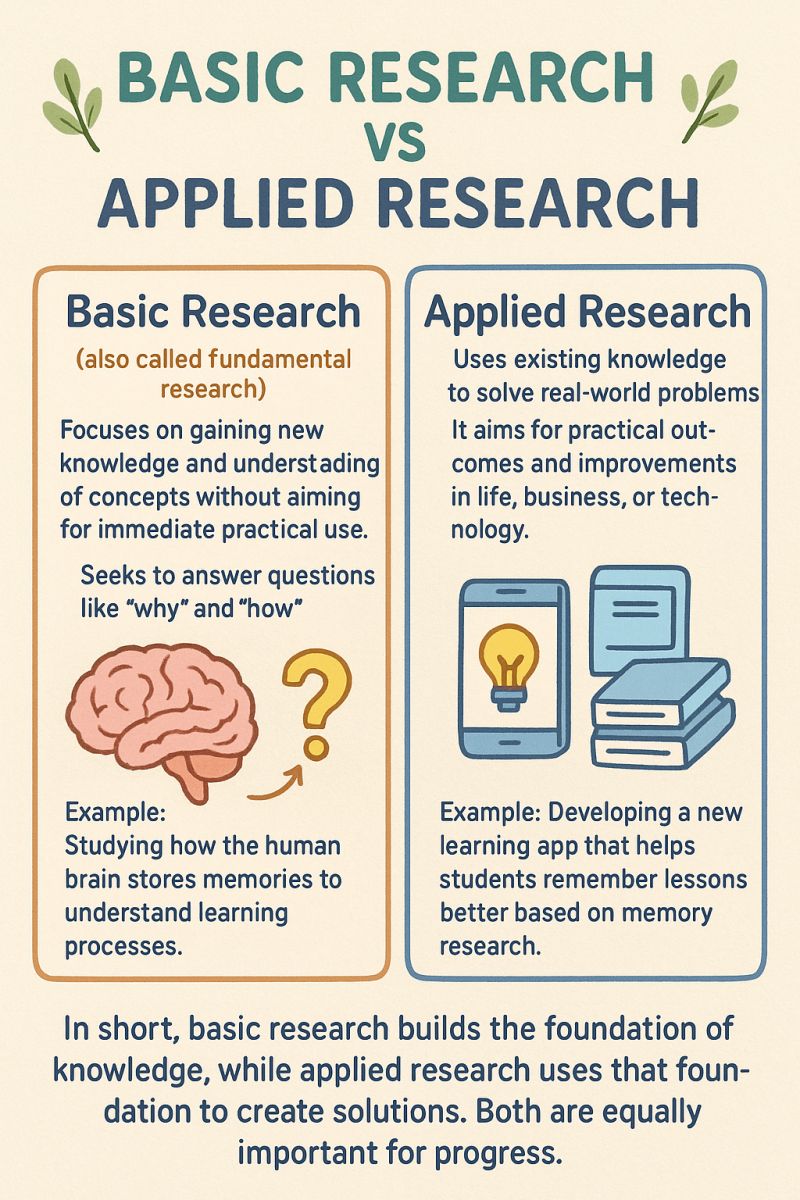
Applied research plays a crucial role in bridging the gap between theory and practice by focusing on practical solutions to real-world problems. Unlike basic research, which aims to expand knowledge and understanding, applied research is directed towards specific goals and outcomes that can be implemented to make a tangible impact on society.
One of the key characteristics of applied research is its relevance to current issues and challenges faced by individuals, communities, industries, and governments. By working closely with stakeholders and end-users, applied researchers can develop innovative solutions that address pressing needs and improve quality of life.
Applied research often involves collaboration between researchers, industry partners, policymakers, and other stakeholders to ensure that the findings are not only scientifically sound but also feasible and practical in the real world. This interdisciplinary approach allows for a holistic perspective that considers various factors influencing the problem at hand.
Another important aspect of applied research is its focus on implementation and impact. Researchers are not only concerned with generating new knowledge but also with translating that knowledge into actionable strategies, products, or policies that can bring about positive change. This emphasis on application distinguishes applied research from purely academic pursuits.
Furthermore, applied research is instrumental in driving innovation and driving economic growth. By addressing specific challenges faced by industries or society as a whole, applied researchers can help create new technologies, processes, or services that enhance competitiveness and sustainability. This practical orientation fosters a culture of continuous improvement and adaptation to meet evolving needs.
In conclusion, applied research serves as a vital link between theory and practice by providing practical solutions to real-world challenges. Its relevance, collaboration-oriented approach, focus on implementation, and contribution to innovation make it an essential tool for addressing complex problems and improving societal well-being.
Understanding Applied Research: Definitions, Comparisons, and Types
- What best defines applied research?
- What is applied research vs. basic research?
- What is meant by applied research?
- What are two types of applied research?
What best defines applied research?
Applied research can be best defined as a systematic inquiry that aims to solve specific practical problems or address real-world issues. Unlike basic research, which focuses on expanding knowledge for its own sake, applied research is driven by the need to create tangible solutions that have direct relevance and applicability in various fields. It involves the practical application of existing knowledge and theories to develop innovative strategies, products, or policies that can bring about positive outcomes and impact individuals, communities, industries, or society as a whole. The key distinguishing feature of applied research is its emphasis on solving problems and making a meaningful difference in the world through actionable results.
What is applied research vs. basic research?
In the realm of research, a common question arises regarding the distinction between applied research and basic research. Applied research is characterised by its practical focus on addressing specific problems or challenges in real-world settings, aiming to develop solutions that can be directly implemented to bring about tangible benefits. On the other hand, basic research is driven by a quest for knowledge and understanding of fundamental principles without immediate practical applications in mind. While applied research seeks to solve practical problems and generate actionable outcomes, basic research explores concepts and theories to expand the boundaries of knowledge without an immediate focus on practical implementation. Both forms of research are essential in advancing scientific understanding and innovation, with each serving distinct purposes in contributing to societal progress and development.
What is meant by applied research?
Applied research refers to a systematic investigation that seeks to address practical problems or challenges faced in real-world settings. Unlike basic research, which aims to expand theoretical knowledge, applied research focuses on developing solutions that can be directly implemented to address specific issues or improve existing practices. By applying scientific methods and findings to practical scenarios, applied research aims to generate actionable outcomes that have a tangible impact on individuals, communities, industries, or society as a whole. The key emphasis of applied research is on relevance, feasibility, and the potential for creating positive change in the world around us.
What are two types of applied research?
In the realm of applied research, two common types are evaluative research and action research. Evaluative research focuses on assessing the effectiveness, efficiency, and impact of existing programs, policies, or interventions to inform decision-making and improve outcomes. On the other hand, action research involves collaborative efforts between researchers and practitioners to identify and address specific problems or challenges in real-world settings through a cyclical process of planning, action, observation, and reflection. Both types play a crucial role in generating practical solutions and driving positive change in various fields by directly engaging with stakeholders and translating research findings into actionable strategies.