
Understanding Quantitative Research Methodology: Methods, Design and Analysis
Quantitative Research Methodology
Quantitative research methodology is a systematic approach to studying questions through numerical data. Researchers use it to measure variables, identify patterns, compare groups and test hypotheses. It is commonly used in fields such as health, education, social science, business and environmental research.
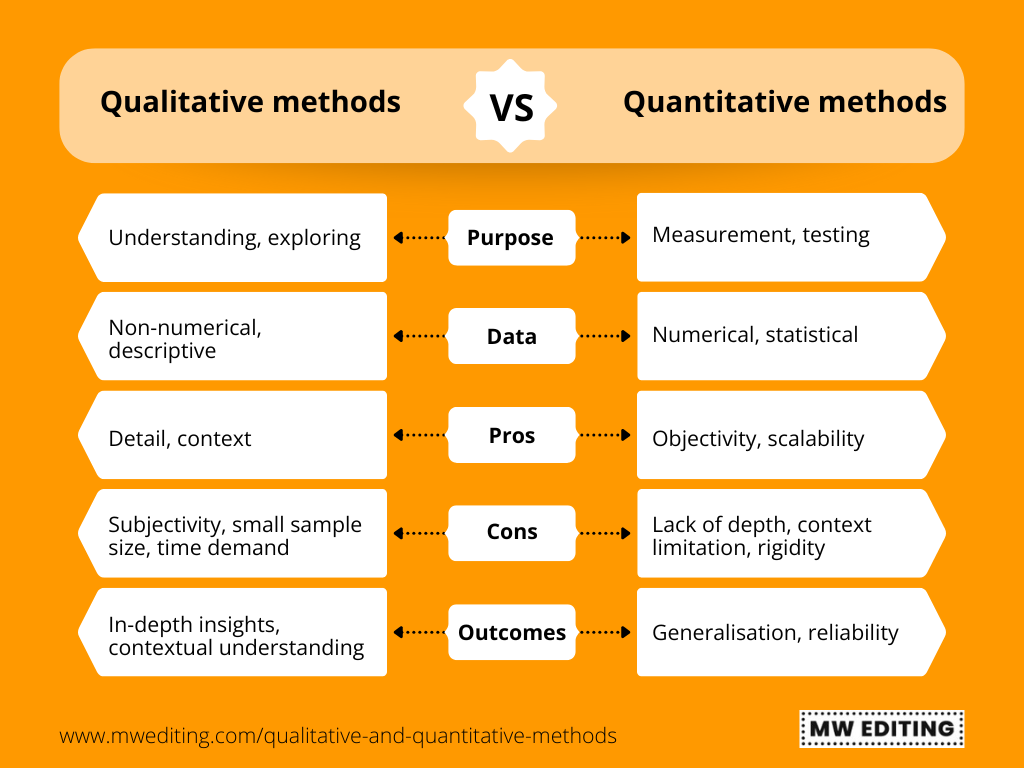
Unlike qualitative research, which explores meaning and experience through material such as interviews or observations, quantitative research focuses on information that can be counted or measured. The two approaches can also be combined in a mixed-methods study.
What is quantitative research?
Quantitative research examines measurable features of a topic. These features are known as variables. For example, a study might measure age, income, test scores, hours of sleep or reported levels of stress. Researchers then analyse the data using statistical methods to answer a research question.
A quantitative study may ask questions such as:
- How common is a particular behaviour or condition?
- Is there an association between two or more variables?
- Does an intervention lead to a measurable change?
- Do outcomes differ between groups?
Common quantitative research designs
Descriptive research
Descriptive studies summarise the characteristics of a population or phenomenon. Surveys and structured observations are often used to estimate how common something is or to describe a group’s views and behaviours. Descriptive findings do not, by themselves, establish why a pattern exists.
Correlational research
Correlational research examines whether variables are related. For example, researchers might investigate whether time spent exercising is associated with reported wellbeing. An association does not necessarily mean that one variable causes the other: other factors may influence both, or the direction of the relationship may be unclear.
Experimental research
Experimental studies test the effect of an intervention by deliberately changing one factor and measuring the outcome. In a randomised controlled trial, participants are allocated to different groups by chance, which can help reduce the influence of confounding factors. The precise design depends on the research question and what is practical and ethical.
Quasi-experimental research
Quasi-experimental studies evaluate an intervention without full random allocation. They may be useful when randomisation is not feasible, such as when a policy is introduced across a community. Researchers must consider carefully whether differences between groups, or other changes over time, could explain the results.
The main stages of a quantitative study
- Define the research question. A clear, focused question guides the design, data collection and analysis.
- Review existing evidence. Reviewing relevant research helps establish what is already known, identify gaps and refine the study.
- Specify variables and measures. Researchers define what they will measure and how. A concept such as wellbeing, for example, may need to be represented by a suitable questionnaire or other validated measure.
- Select a design and sample. The design should fit the question. Researchers also decide who will take part and how participants will be recruited.
- Collect data consistently. Standardised procedures help ensure that measurements are taken in the same way across participants or settings.
- Analyse the data. Statistical analysis is selected to match the research question, design and type of data.
- Interpret and report the findings. Results should be explained in context, with limitations and uncertainty made clear.
Sampling and sample size
A sample is the group from which data are collected. Ideally, it reflects the population the researchers want to understand. Probability sampling gives members of a population a known chance of selection and can support broader generalisation. Non-probability sampling, such as recruiting volunteers, may be more practical but can increase the risk of selection bias.
Sample size matters because it affects how precisely a study can estimate an outcome and how likely it is to detect a genuine effect. Researchers often use a power calculation to estimate the number of participants required. A larger sample does not automatically make a study reliable: the sampling method, measurement quality and study design also matter.
Data collection methods
Quantitative data may be collected through structured questionnaires, tests, clinical measurements, administrative records, sensors or systematic observation. The method should be appropriate to the variable being studied. Researchers should consider whether an instrument is valid (whether it measures what it is intended to measure) and reliable (whether it produces consistent results under comparable conditions).
Data analysis
Analysis begins with checking and preparing the data. Researchers may look for missing values, errors, unusual observations and departures from the assumptions of the planned analysis. Descriptive statistics, such as averages, percentages and measures of spread, help summarise the data.
Inferential statistics are used to estimate patterns or differences beyond the observed sample. Depending on the question and data, a study may use methods such as regression, comparisons between groups or tests of association. Results should be reported with suitable measures of uncertainty, such as confidence intervals, rather than relying only on whether a result passes a chosen significance threshold.
Statistical significance is not the same as practical or clinical importance. A small effect can be statistically significant in a very large study, while an important effect may be estimated imprecisely in a small one. Interpretation should therefore consider the size of the effect, its uncertainty, the quality of the evidence and its relevance to the research context.
Strengths and limitations
Quantitative methods can provide structured, comparable measurements and allow researchers to estimate the size of patterns or differences. When a study is well designed, its findings may help inform decisions, evaluate interventions and test theories.
However, numerical data cannot always capture the context or meaning behind people’s experiences. Results may also be affected by measurement error, biased sampling, missing data, confounding or inappropriate statistical choices. A finding from one sample or setting may not apply to another. In addition, an observational association should not be presented as proof of causation.
Ethics and transparency
Quantitative research should protect participants’ rights, privacy and welfare. Depending on the study, this may involve informed consent, secure handling of personal data, appropriate ethical review and clear procedures for withdrawing from participation. Researchers should also be transparent about how participants were recruited, how variables were measured, which analyses were planned and how missing or excluded data were handled.
Conclusion
Quantitative research methodology offers a practical framework for measuring phenomena and examining patterns using numerical data. Its value depends not only on statistical analysis but also on clear questions, suitable measures, thoughtful sampling and careful interpretation. When these elements are aligned, quantitative research can produce findings that are useful, credible and appropriately understood.
Understanding Quantitative Research Methodology: Key Methods, Types, and Examples
- What are the 5 methodology of quantitative research?
- What are the four types of quantitative research?
- What is an example of a quantitative method?
- What are 5 examples of quantitative research?
- How to write a methodology in quantitative research?
- What is the methodology of quantitative research?
What are the 5 methodology of quantitative research?
The five commonly used quantitative research methodologies are descriptive, correlational, causal-comparative (also called ex post facto), experimental and quasi-experimental research. Descriptive studies measure and summarise characteristics, correlational studies examine relationships between variables, and causal-comparative studies compare existing groups to explore possible explanations. Experimental research tests an intervention using controlled conditions and, often, random assignment; quasi-experimental research also evaluates interventions but lacks full random assignment. These categories can vary between textbooks, and the best choice depends on the research question.
What are the four types of quantitative research?
The four commonly recognised types of quantitative research are descriptive, correlational, experimental and quasi-experimental. Descriptive research measures and summarises characteristics or trends; correlational research examines relationships between variables without establishing cause and effect; experimental research tests the effects of an intervention, typically using controlled conditions and random allocation; and quasi-experimental research evaluates an intervention without random allocation. These categories can vary between textbooks and disciplines, so the most suitable approach depends on the research question and study context.
What is an example of a quantitative method?
A common example of a quantitative method is a structured survey that asks a large group of people the same questions and records their answers numerically. For instance, researchers could ask 500 employees to rate their job satisfaction on a scale from 1 to 5, then analyse the responses to calculate average satisfaction and compare results across departments. This method produces measurable data that can be summarised and examined statistically.
What are 5 examples of quantitative research?
Five examples of quantitative research include a survey measuring how many hours university students study each week; an experiment comparing test scores after two different teaching methods; a clinical trial assessing whether a medicine reduces blood pressure; an analysis of the relationship between exercise frequency and reported wellbeing; and a census counting the population’s age groups and household sizes. Each example collects numerical data and uses statistical analysis to describe patterns, compare groups or examine relationships.
How to write a methodology in quantitative research?
To write the methodology for a quantitative research study, explain clearly how the research was designed and carried out so that readers can assess or replicate it. State the research question and design, identify the target population and sampling method, describe the sample size and participants, and explain which variables and measurement tools were used. Outline the data-collection procedure, the statistical methods used to analyse the data, and any steps taken to address reliability, validity, ethics and participant confidentiality. Include enough detail to justify your choices and report any limitations, while keeping the account precise and relevant to the study.
What is the methodology of quantitative research?
The methodology of quantitative research is a structured approach to answering research questions using numerical data. It typically involves defining a clear question and measurable variables, selecting an appropriate research design and sample, collecting data through standardised methods such as surveys, tests or experiments, and analysing the results using statistical techniques. Researchers then interpret and report their findings, taking account of uncertainty, limitations and ethical considerations.